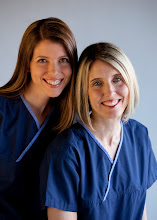
Kristin had recently started her Senior year of high school. In addition to school, she also loved to teach children how to swim. She was a good swimmer and a former water polo player. On September 9, 2010 she was teaching children at Tricks Gymnatics, Dance and Swim in Folsom when she suddenly suffered a cardiac arrest and almost drowned. Two co-workers immediately noticed Kristin, unconscious in the swimming pool, and pulled her out of the water. Her manager immediately began CPR. He was trained and certified in CPR but had never had to use it before, however, his instincts and training took over. He performed CPR including mouth to mouth breathing for nearly 10 minutes before the paramedics arrived. The paramedics transported her to Mercy Folsom Emergency Room where they worked on her for over 2 hours. They were able to get her heart beating again and started a procedure called therapeutic hypothermia.
Therapeutic hypothermia is used on any adults who have suffered a cardiac arrest. It is a procedure where a person's core body temperature is brought down to 32 degrees celcius (89.6 degrees fahrenheit) in an effort to reduce the amount of neurological damage to the brain caused from their cardiac arrest. A person is kept in this state for approximately 24 hours and then their body is warmed up 1 degree per hour until they are back to a normal temperature. This is exactly what they did with Kristin.
Kristin with her classmates
In addition to the use of therapeutic hypothermia, Kristin was also placed on a heart assistive device called a balloon pump, and on a breathing machine and was given several medications to prevent her heart from stopping again. Kristin was unconcious for 5 days but when she woke up, she was living proof that modern medicine works!! She woke up not remembering the event but has no sustaining neurologic deficits which is a TRUE MIRACLE.
Kristin walking for the first time in the hospital
Kristin is already back at school, enjoying what every 17 year old teenager should, her senior year in high school!! Kristin has an implantable cardiac defibrilator to prevent a reoccurrance of the cardiac arrest due to her abnormal heart rhythm but she is otherwise a normal teenage girl.
To give you an idea of how miraculous Kristin's story is you should know that, according to the American Heart Association, more than 95% of cardiac arrest victims die before they ever reach the hospital.
Kristin's work manager should also be highly commended because he played a tremendous role in the fact that Kristin not only survived but that she did not suffer any neurologic damage. According to the American Heart Association, bystander CPR doubles a person's chance at survival. Also, brain damage after cardiac arrest can occur as quickly as 4 to 6 minutes after the event unless immediate CPR is begun.
We highly encourage everyone to take a CPR class. You may never use it in your lifetime, however, if you are ever in a situation like this, you will have a great opportunity and privilege to save a life. You can find and sign up for CPR classes at this link: The American Heart Association.
You may have noticed in the pictures above that Kristin was wearing the "Anita" Annie & Isabel hospital gown. While Kristin fought for her life in the hospital she was gifted this hospital gown by her friend and classmate Lauren. Lauren has been fighting AND winning her own battle with Hodgkin's Lymphoma. We will be sharing her inspirational story on our blog soon.
I contacted Kristin's mom to find out how Kristin was doing and she told me that Kristin is doing well. "She just wants to be a normal 17 year old". Kristin's mom, Lisa, gave us this wonderful testimonial about Kristin's Annie & Isabel designer hospital gown:
"The gown was a gift from one of my daughter's good friends who has cancer. I took it home and washed it and when I brought it back to the hospital, she immediately wanted to wear it. It smelled like home, and the fabric was so soft...she just loved it. All the nurses commented how "cute" her gown was and how it made her feel good...at 17 loving a hospital gown is a pretty special order. When we had to go back for a second surgery that was top on her list for me to bring down to her! What a great gift to give! Thanks for making her feel so much more comfortable and beautiful!" ~Lisa Jesse


This is a quote from Nancy Brinker about how Susan G. Komen hated the standard hospital gown:
"I understand now why Suzy hated hospital gowns. At the time, I guess I thought, Why wouldn't she hate them? She was an impeccably stylish woman who cared a lot about how she looked. That's who she was. But in retrospect, I think there was more to it than that. The one-size-fits-all boxiness of the thing is dehumanizing. That pragmatic but potentially breezy opening in the back goes to the very etymology of the word embarrassing, and the very idea that one size does or can or should even attempt to fit all was offensive to Suzy, literally and metaphorically. This wasn't a matter of style or aesthetics - it was part of a larger dynamic that makes so many cancer patients feel dehumanized and stripped of their dignity."
To learn more about Nancy G. Brinker and her book "The Promise" you can visit her website at http://www.nancygbrinker.com/.

A&I: When were you diagnosed with breast cancer and how was it discovered?
Diane: My twin sister, Denise, was diagnosed when we were 33. It was a complete surprise. She went through a lumpectomy, chemotherapy, and radiation. Because of her experience, I was on the lookout - mammograms every 2 years until 37 and then annually.
A&I: What helped you the most while going through treatments for breast cancer?
Diane: Having a sense of humor and sticking to routine. At the time of my diagnosis, I was only 39 and my kids were 10, 7, 3 and 2. This made it very hard to sit around and feel sorry for myself. My husband and I don't have any family that is not at least a 2 hour plane ride away so we had to rely on the kindness of neighbors and friends during this period. We were overwhelmed with kindness. The meal calendar that friends set up for me went on for over 2 months with only 1 or 2 duplicate families providing meals. Our son's football team contributed to pay for a housekeeper for 3 months. My BFF Holly, despite the fact that she was living in Budapest, Hungary at the time, arranged a weekly "Chemo Fairy" to anonymously drop off goodies on my doorstep every week during the time I was undergoing chemotherapy. At the end of my treatment, we all went out and the "Fairies" were revealed. It was thoughtful and got me through the dark days following an infusion. Most importantly, though, is my faith in God that He would use this experience for good. I'm seeing some of that come to fruition in my work with Pink Pockets and some of the blogging I have done on my breast cancer experience
A&I: What is the best advise you can give to those newly diagnosed with breast cancer?
Diane: Don't panic. The medical ingenuity in treatment grows every year and the survival rates have never been greater nor afforded those diagnosed with as much hope as there is today for recovery and living a long and wonderful life. I let myself have five minutes of self-pity before making up my mind that I was not just going to endure my bout with breast cancer, I was going to prevail. At the time of diagnosis, my children were 10, 7, 3, and 2. My plan was to stick to routine as much as possible - not just for their benefit, but for mine as well. By allowing others to drive for a while - an overwhelming response from my husband, family, friends, neighbors - we were able to fight this battle and were given a chance to grow closer as a family and laugh a little at the next curve balls we faced at the plate. I like to focus on the positives of this experience such as my creation of Pink Pockets, temporary surgical drain pockets to use after breast surgery, which will give great comfort to those in a similar situation. We can't know the "whys" of things in this life, but we can be certain that we can use them to serve others if we choose.

A&I: Tell us about Pink Pockets
Diane: A few weeks before my bilateral mastectomy, a woman, Jennifer, in my local breast cancer support group "The Pink Ribbon Cowgirls" gave me a simple, hand-made cotton camisole with ladybugs on it. Volunteers make them and donate them to the Breast Cancer Resource Center. Jennifer had worn it a few weeks earlier after her bilateral mastectomy and she knew that the garment - with pockets sewn inside - was a God send. Those drains are so awful and uncomfortable. Doctors really do not give enough warning about these uncomfortable and unwieldy appendages. When my sister was planning for her prophylactic bilateral mastectomy, I brought it to her and began looking for more affordable garments. Retail "special shirts" or "gowns" with pockets start around $40. That is a lot of money - and Jennifer and I surmised that we could produce one for a better price point to make it a more affordable choice. Everyone should have something to help them manage these drains. As we were doing some due diligence, I began thinking about what I wore after my surgery. I wanted to feel as normal as I could, wearing normal clothes. I wore regular button down shirts or pjs that I bought specifically for after the surgery (your arms are useless for a while - nothing over your head) and I wondered if you could just put a pocket inside your own clothes. And you know what? You can. One size fits all.
A&I: How long does each Pink Pocket last?
Diane: You can remove and re-stick the pocket - it doesn't adhere quite as well, but still can be re-used on another garment. You can also wash your garment once or twice and the pocket will stay on. Just don't put the dryer on high heat. The heat will cause the pocket to pucker. You can also just hang your garment to dry. My Pink Pockets come in a package of 3 pairs for $13.99 plus shipping or 5 pairs for $19.99 plus shipping and a portion of each sale goes to both the Austin Affiliate of the Komen for the Cure Foundation (http://www.komenaustin.com/) and the Breast Cancer Resource Center. (http://www.bcrc.org/) The pockets last as long as you have your drains. Just peel them off your garment and discard when done. We use 100% cotton fabric and the prints vary based on what we can find. They are cute but no one sees them as they fit inside your clothes.
Thank you Diane for sharing your story!!! If you want to learn more about Pink Pockets, please visit her website at Pink Pockets
Blog design © 2011 FossMG.
Unauthorized use of this site's design or code is strictly prohibited.